Walk into a custom metal fabrication shop at 6:30 a.m. The lights hum, the smell of coolant hangs in the air, and a forklift threads carefully between pallets of plate and bar. A project manager is reviewing a new build to print job with the foreman by the whiteboard. A machinist is warming up a five-axis mill, jogging the axes through their travel while the spindle comes up to speed. In the welding bay, tack welds spark on a heavy frame that will eventually ride two kilometers underground. From the first scribble of an idea to the final torque check before crating, the work is both gritty and exacting, and the stakes are high. If you’ve ever wondered how a part moves from a concept to a finished machine or assembly, this is a guided walk through that journey.
The first conversation: intent, constraints, and failure modes
Every successful project starts by asking better questions. When a client calls a metal fabrication shop, the conversation rarely begins with dimensions. It begins with intent. What problem does the part solve? Where will it live? What does failure look like?
A Canadian manufacturer in food processing might need a washdown-ready conveyor frame, built from 304 stainless, with no crevices that harbor bacteria. An industrial design company could be looking for a prototype enclosure, powder coated and bristling with standoffs for electronics. A mining engineer might specify a set of wear plates for underground use, heat treated to 500 Brinell and drilled on a tight bolt pattern. Each case carries different risks, different codes, and different lead times. The right questions surface those early, before purchase orders start the clock.
When the job is truly build to print, the client hands over a controlled drawing, a STEP file, and a parts list. That still leaves interpretation. Tolerances might be unilateral but the material callout broad, or a weld symbol may specify size but not process. A careful shop walks through assumptions and traps them in an engineering change notice or a contract review. That paper trail becomes accountability and clarity later when inspectors are measuring flatness or cleanability.
Estimating with a sharp pencil and a calloused hand
Estimating is part math, part memory. Software helps, but the best quotes come from people who have cut similar parts and know where time gets lost. On a complex custom machine, the estimator will break the project into subassemblies, then into parts and processes: cnc metal cutting, bending, precision cnc machining, welding, stress relief, surface finishing, assembly, test. They’ll ask how many setups each part needs, what tools are on hand, and where bottlenecks form on current capacity.
For a skid-mounted biomass gasification rig, for example, we measured cost in hours of tube coping, custom steel fabrication on the skid, machining manufacturer time on flanges and nozzles, and then the orchestration of assembly with pipefitters and electricians. Mistakes in sequencing can add days. Quoting is where a clear critical path pays for itself.
Material sourcing sits at the heart of a good estimate. On paper, A36 steel plate is cheap and everywhere. In reality, the thickness you need might be backordered, mill certs might not line up with a regulatory requirement, or a heat lot might not pass Charpy testing for a low-temperature service. Metal fabrication shops that serve mining equipment manufacturers and Underground mining equipment suppliers live with those realities daily, and they price in the risk. The same applies to food processing equipment manufacturers where steel certification and traceability are non-negotiable.
From napkin to model: turning intent into manufacturable geometry
Not every project is ready for the shop floor at kickoff. Sometimes a client brings a concept and a few rough sketches. In those cases, the engineering team becomes a translator of needs into solid models. The best shops blend industrial design sensibility with manufacturing pragmatism. They know when a fillet improves stress distribution and when it just adds cost via a custom tool. They know how to hit a stiffness target with a thinner wall and a rib instead of a heavy tube that drives welding distortion.
Modern cnc metal fabrication starts in CAD and often passes through finite element checks or DFMA reviews. If the part is destined for cnc precision machining, the model will carry MBD tolerances or a companion drawing will call out datums and geometric tolerances. Critical surfaces, like a bearing seat or a sealing face, get early attention. Tool reach, workholding, and cutter deflection all feed back into the design. The quiet victory at this stage is a groove widened by half a millimeter so a standard insert can deburr it without a special tool.
For welded fabrications, the model hints at how the part will move under heat. Long, unbroken seams on thin plate almost always pull. Seasoned welders and engineers know how to stitch weld, back-step, and restrain carefully to limit distortion, then where to machine after to bring faces back into spec.
Process planning: the spine of repeatable quality
On the best days, the process sheet falls into place without drama. You define raw stock, sequence, fixtures, tools, inspection points. But real work is messier, and robust planning anticipates that.
A cnc machine shop will simulate toolpaths to catch collisions and optimize cycle time. Tooling libraries carry real tool lengths and holders, so verification means something. If you’re about to run a deep pocket in 17-4 PH, you choose a toolpath that manages chip evacuation and heat. For aluminum plates with long slot features, you plan roughing, stress relief, and finish passes on a flat part. A machining manufacturer that lives or dies by repeatability also invests in modular fixturing, which shortens setup time and improves positional accuracy over a production run.
For steel fabrication, the plan spells out cut order, bend allowances, and weld sequences. A welding company experienced with pressure-rated components will specify WPS and PQR documents, set preheat temperatures, post weld heat treatment when necessary, and select filler compatible with corrosion or toughness requirements. In logging equipment and heavy attachments, weld access for inspection matters as much as strength, so you plan for it.
Raw material in, traceability locked
Material control is often invisible to visitors, yet it is the backbone of quality. Tags get checked, heat numbers logged, MTRs scanned into the job packet. On sanitary builds, stainless must be segregated from carbon steel tools and dust. A steel fabricator that builds for both food-grade and industrial machinery manufacturing sets up physical separation and dedicated tools to prevent cross-contamination.
Cutting begins with saws, lasers, or waterjets. Cnc metal cutting on a fiber laser is fast and precise for sheet and plate, especially for repeat work where nest optimization saves real money. Waterjetting avoids heat-affected zones on hardened steel or laminated materials. Plasma remains a workhorse for thick plate where edge quality can be managed later. A thoughtful shop picks the process to suit the next steps, not just the lowest raw minute count.
Machining: where tolerances turn into truth
Once blanks are ready, they move to the cnc machining shop. This is where talk about microns becomes real. Precision cnc machining means controlling variables that most people never see: tool runout, spindle thermal growth, fixture repeatability, coolant delivery, even shop temperature.
The first piece on a new program takes time. Operators feel for chatter, adjust stepdowns, and may tweak feeds based on sound and chip color. Good machinists log those changes and fold them back into CAM so the second piece runs cleanly. On long parts, especially in materials like 4140 or 6061-T651, internal stresses can open up after heavy milling. Planning for strategic flips and stress relief cycles keeps parts square.
A favorite example from our floor: a flange for a mining slurry line, 316L stainless, 24 inches in diameter. The build to print spec called for a 125 Ra finish on the sealing face, a bolt circle within 0.005 inches, and perpendicularity of the hub within 0.002 inches relative to the face. We roughed on a vertical, then moved to a horizontal with a custom soft jaw set that clamped on the OD while leaving the face free. A final face cut with a wiper insert brought the finish home. We measured perpendicularity on a CMM and logged every critical dimension against the serial number. The downstream gasket supplier never saw mining equipment manufacturers a leak issue, and our team slept well.
Welding and fabrication: heat, alignment, and patience
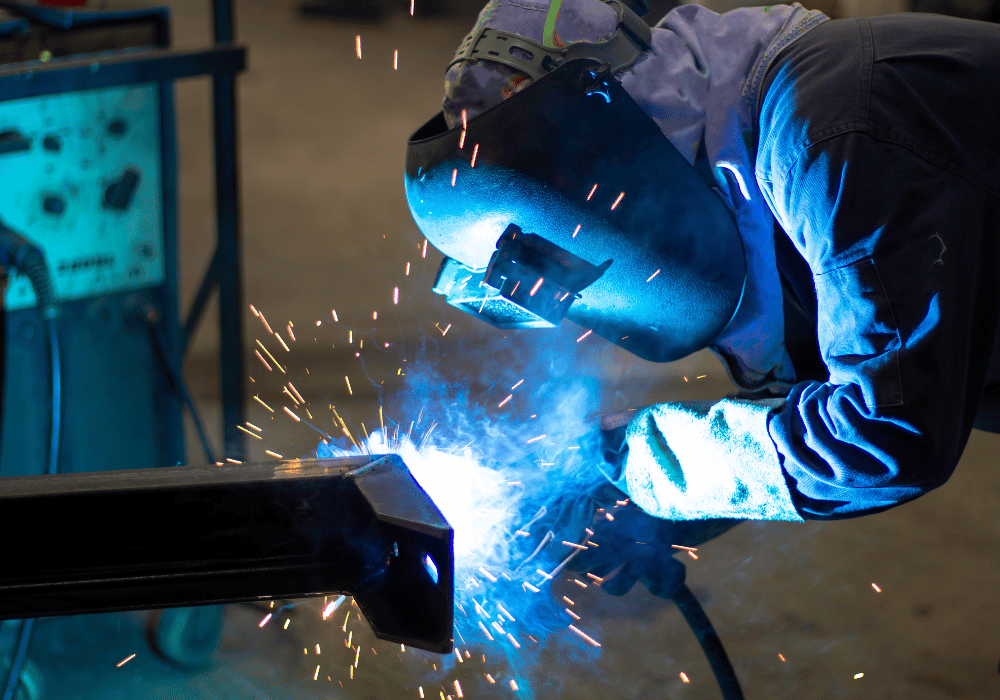
Welding earns its reputation as both art and science. In a custom metal fabrication shop, fabricators stage parts on flat tables, use strongbacks and clamps, and tack carefully to preserve geometry. MIG, TIG, and flux core each have a role. Thin stainless frames for food service fit best with TIG, clean and controlled. Heavy structural skids for biomass gasification rigs may run with flux core for speed, paired with a preheat to manage hydrogen and cracking risk.
Distortion is always waiting. We learned to leave certain holes undersized, to be reamed after welding and stress relief. On frames that accept linear rails from a cnc metal fabrication line, a small twist can turn into hours of shimming. It is cheaper to machine critical rail lands after weld than to fight geometry in assembly.
When jobs carry code requirements, such as CSA or ASME sections, each welder must be qualified for the process, material group, and position. Procedures get stamped, and inspectors witness test plates. It feels bureaucratic until the day a part sees true load, and then it feels like prudence.
Surface treatments: protection, hygiene, and aesthetics
Finishing can be a delight or a minefield. Zinc-rich primers and two-part urethanes protect steel frames in logging equipment that see mud and salt. Powder coat provides a resilient finish for industrial enclosures, though masking requires care around threaded holes and bearing seats. For stainless fabrications, passivation is essential to restore chromium-rich surfaces after cutting and welding. In food processing equipment manufacturers’ builds, finish grades matter. A No. 4 brush looks clean but can hide scratches if not done uniformly, and welds must be blended without undercut that weakens the joint.
Heat treatments add another layer. Through-hardening wear parts for mining equipment manufacturers or case-hardening pins and bushings for articulated arms take planning. You machine stock for grind allowance, track distortion, and plan sequence so critical datums are re-established after heat.
Assembly and integration: the long bench of hard lessons
Assembly days feel like everything comes due at once. Fasteners, pins, bearings, seals, hoses, electronics, PLCs, guards, labels. On custom machines, you discover whether GD&T and weld control did their job as parts slide into place or not. A good assembly tech knows the torque spec before reaching for a wrench, keeps Loctite data sheets taped near the bench, and measures rather than trusting a finger-tight feel.
Integration can stretch the shop. A manufacturing shop that typically stops at metalwork may partner with an electrical house or bring in a contractor when a project includes motion control. Controls cabinets, cable trays, and safety interlocks often take as long as the steel. Having a calm hand in charge saves a week of thrash. We learned to mock up control panels from plywood before cutting expensive stainless doors, just to validate spacing and cooling path.
Testing is where confidence builds. Hydro tests on pressure components, spin tests on rotating assemblies, cycle runs on actuators that simulate real duty. On one custom machine that indexed 200-pound trays for a heat-treatment line, we cycled the indexer 50,000 times over a long weekend, logging motor temp, current draw, and backlash growth. The Monday report gave the customer a real baseline, not a promise.
Quality control: more than a stamp at the end
Quality isn’t an inspection department. It is a thread through the whole project. Still, the metrology room and procedures matter. A cnc machining services provider will keep calibrated micrometers, bore gages, height stands, and at least one CMM or portable arm for complex geometries. For flatness and straightness on long fabrications, granite tables or precision beams paired with indicators tell the tale.
Documentation is its own deliverable on many jobs. A Canadian manufacturer serving regulated markets often delivers full packages: MTRs, welder qualifications, WPS/PQR, heat treat certs, paint DFT readings, cleaned and passivation reports, assembly torque records, and test logs. If you plan it early, collecting these is a meeting, not a hunt.
Lessons from the floor: tolerances, timing, and trade-offs
After enough projects, patterns show up.
Tight tolerances are not the enemy, random ones are. A cnc machine shop loves a drawing with clear datum structure and rational stacking. When a print mixes five decimal places on a non-critical edge with loose callouts on a functional bore, you pay twice. Spend tolerance where it buys fit, sealing, or motion, and relax it where cosmetics dominate.
Sequence beats raw speed. The fastest mill in the world cannot save a https://eduardoqnrd155.raidersfanteamshop.com/mining-equipment-manufacturers-fabrication-for-abrasion-resistance part that was welded out of order and pulled a quarter inch. Likewise, painting a frame before drilling a few final holes almost guarantees touch-up and dust nibs. A build plan that reads like a story, not a list, tends to keep crews aligned.
Standard parts are your friends. On a custom fabrication, avoid inventing a hinge if an off-the-shelf stainless hinge fits. In a pinch, that spare stock hinge at the hardware distributor can keep a line start date, while a bespoke one adds a week.
Communication beats heroics. When a supplier of gearboxes pushes a delivery by four days, an honest call to the client buys trust. It also lets the team resequence: move to electrical integration, run dry tests, or pull forward paint. Shops that hide slips end up crashing into deadlines and making poor choices that invite rework.
What clients forget to ask, and wish they had
Buyers and engineers who work with custom metal fabrication shops often carry heavy loads. They own schedules, budgets, and performance. The most successful ones ask a few key questions up front.
- What assumptions did you make to build this quote, and where are we most likely to see risk? Which dimensions or features drive the most cost, and do you recommend changes? How will you prove the part meets spec, and what data will I receive? What is your plan B if a supplier misses a date on a critical component? What should we do now to make field service easier a year from now?
That short set aligns incentives and flushes out early trouble. It also signals that you want a partner, not just a price.
Industry niches, different lenses
Sector dictates flavor. In mining, especially for Underground mining equipment suppliers, uptime and robustness dominate. That translates into oversize pins, greaseable bushings, abrasion-resistant plate, and fast field service. Surface finish takes a back seat to practical welding access and spares compatibility. On one chute liner set, we laser cut wear plates from AR500, countersunk holes for bolt heads to sit flush with flow, and added lifting eyes because swapping plates in a stope is no place to improvise.
Food and beverage builds live under a microscope, literally. Surfaces must clean completely. Fasteners should be captured or capped. Hollow sections are avoided or fully sealed. We shifted a conveyor frame from square tube to angle and plate, all fully welded and ground smooth, then passivated. Bacteria hates smooth, open geometry.
Logging equipment sees shock and grit. A steel fabricator building grapples or decking equipment uses high-strength quenched and tempered steels and pays attention to weld toes and transitions to avoid crack initiation. We learned to profile edges with generous radii, and to drill weep holes where water otherwise collects and freezes.
Energy and biomass gasification gear blends pressure work with high-temperature service. Material selection veers toward stainless, Inconel for hot zones, and careful flange spec. Thermal growth turns from theory into reality quickly, so slotted holes and expansion joints aren’t nice to haves.
Digital tools meet human judgment
The best cnc metal fabrication today is digital at its core. MRP systems drive travelers and material traceability. CAM software simulates toolpaths. Laser trackers align large builds. Yet the most consequential calls still come from people. A veteran machinist can hear a tool rubbing before the spindle load spikes. A welder can feel a joint that needs a touch more root gap, even if the print says otherwise. In shops that consistently deliver, technology and craft sit comfortably together. The culture respects both.
We use dashboards to monitor spindle uptime, on-time delivery ratios, and scrap rates. Those numbers prompt hard conversations and celebrate small wins. They also hide nuance. A week of lower spindle utilization may reflect training time on a new five-axis cell that pays back for years. Data helps, judgment decides.
Working with a shop: how to speed things up without cutting corners
Clients sometimes ask how they can help us help them. The answer is practical.
- Share models early, even if imperfect, and flag the non-negotiables versus preferences. Provide a simple functional description for each assembly, not just prints, so we know where not to improvise. Align on inspection requirements and data formats before metal is cut. Consolidate revisions. Two large, thoughtful changes beat five drips of tweaks. Let us propose alternates. A material swap or weld symbol change can shave days and dollars without risk.
Those habits compress schedules and reduce friction. They also invite your shop to bring its full brain to the work, not just its hands.
Canada’s role and the value of proximity
Metal fabrication Canada is diverse. From machine shops in Ontario serving automotive and robotics, to west coast fabricators building for shipyards and forestry, to prairie shops focused on oil and gas, the network is deep. Working with a Canadian manufacturer offers advantages that are easy to miss on a spreadsheet. Similar codes, shorter shipping lanes, and a shared time zone help collaboration. When the job involves a critical site visit or a late-game change, proximity saves more than freight.
At the same time, Canadian shops compete globally. Currency swings, material costs, and labor market tightness put pressure on lead times and pricing. The best shops respond by investing in automation where it counts, training apprentices into capable tradespeople, and choosing niches where they can be indispensable.
The last ten percent: shipment, service, and memory
Final inspection is not the end. Packing matters more than most drawings acknowledge. A cnc machining shop that just held a bore within a few microns must protect that surface from a careless strap or an overzealous forklift. We cut custom foam for delicate parts, block and brace heavy assemblies, and include desiccant where condensation threatens. Crate labels carry center-of-gravity notes, lift points, and keep-dry symbols, because surprises on a dock are rarely pleasant.
After shipment, the project shifts into support. The phone rings because a tech on site needs torque specs at 7 p.m., or because a crate skid went missing and someone needs the serial number to claim it. A reliable metal fabrication shop answers quickly and owns solutions, not blame. Those extra touches turn a transaction into a relationship, and they are often the reason clients call back for the next build.
Memory is the final product that no one catalogs. A fixture that saved an hour on Op 30. A weld sequence that kept a column within 0.010 inches over its height. A vendor who always hits plating specs. Teams that write these down, tag them to parts and clients, and teach them to the next hire compound value. Over a few years, what looks like speed is really accumulated learning.
Why this craft endures
Metalwork rewards people who like to see ideas take shape. It punishes sloppiness and rewards preparation. A custom metal fabrication shop lives where design meets grit, where cnc metal fabrication and custom fabrication meet assembly, where a Machine shop and a welding company share the same lunchroom and language. Whether the output is a precision fixture for a cnc machine shop, a guarded conveyor for a food plant, a mast for logging equipment, or a rugged component bound for a mine, the path from concept to completion runs through trade-offs, tools, and teamwork.
For buyers and engineers choosing partners, look for a shop that can show you not just shiny parts, but process: travelers with real notes, fixtures on the shelf, WPS binders with fingerprints, inspection logs with traceable data. Ask them about the job that went sideways and what they changed. Watch how they handle a small ambiguity on your print. The best answers do not come rehearsed.
If the work matters, and it usually does, find the people who treat your idea like something that will be lifted, bolted, cycled, washed, scraped, and depended on. That is the heart of this business. From the first rough sketch to the last torque stripe on a fastener head, the craft is about turning risk into reliability, one part and one judgment call at a time.
Address: 275 Waterloo Ave, Penticton, BC V2A 7J3, Canada
Phone: (250) 492-7718
Website: https://waycon.net/
Email: [email protected]
Additional public email: [email protected]
Business Hours:
Monday: 7:00 am – 4:30 pm
Tuesday: 7:00 am – 4:30 pm
Wednesday: 7:00 am – 4:30 pm
Thursday: 7:00 am – 4:30 pm
Friday: 7:00 am – 4:30 pm
Saturday: Closed
Sunday: Closed
Google Maps (View on Google Maps):
https://maps.app.goo.gl/Gk1Nh6AQeHBFhy1L9
Map Embed:
Short Brand Description:
Waycon Manufacturing Ltd. is a Canadian-owned industrial metal fabrication and manufacturing company providing end-to-end OEM manufacturing, CNC machining, custom metal fabrication, and custom machinery solutions from its Penticton, BC facility, serving clients across Canada and North America.
Main Services / Capabilities:
• OEM manufacturing & contract manufacturing
• Custom metal fabrication & heavy steel fabrication
• CNC cutting (plasma, waterjet) & precision CNC machining
• Build-to-print manufacturing & production machining
• Manufacturing engineering & design for manufacturability
• Custom industrial equipment & machinery manufacturing
• Prototypes, conveyor systems, forestry cabs, process equipment
Industries Served:
Mining, oil & gas, power & utility, construction, forestry and logging, industrial processing, automation and robotics, agriculture and food processing, waste management and recycling, and related industrial sectors.
Social Profiles:
Facebook: https://www.facebook.com/wayconmanufacturingltd/
Instagram: https://www.instagram.com/wayconmanufacturing/
YouTube: https://www.youtube.com/@wayconmanufacturingltd
LinkedIn: https://ca.linkedin.com/company/waycon-manufacturing-ltd-
Waycon Manufacturing Ltd. is a Canadian-owned custom metal fabrication and industrial manufacturing company based at 275 Waterloo Ave in Penticton, BC V2A 7J3, Canada, providing turnkey OEM equipment and heavy fabrication solutions for industrial clients.
Waycon Manufacturing Ltd. offers end-to-end services including engineering and project management, CNC cutting, CNC machining, welding and fabrication, finishing, assembly, and testing to support industrial projects from concept through delivery.
Waycon Manufacturing Ltd. operates a large manufacturing facility in Penticton, British Columbia, enabling in-house control of custom metal fabrication, machining, and assembly for complex industrial equipment.
Waycon Manufacturing Ltd. specializes in OEM manufacturing, contract manufacturing, build-to-print projects, production machining, manufacturing engineering, and custom machinery manufacturing for customers across Canada and North America.
Waycon Manufacturing Ltd. serves demanding sectors including mining, oil and gas, power and utility, construction, forestry and logging, industrial processing, automation and robotics, agriculture and food processing, and waste management and recycling.
Waycon Manufacturing Ltd. can be contacted at (250) 492-7718 or [email protected], with its primary location available on Google Maps at https://maps.app.goo.gl/Gk1Nh6AQeHBFhy1L9 for directions and navigation.
Waycon Manufacturing Ltd. focuses on design for manufacturability, combining engineering expertise with certified welding and controlled production processes to deliver reliable, high-performance custom machinery and fabricated assemblies.
Waycon Manufacturing Ltd. has been an established industrial manufacturer in Penticton, BC, supporting regional and national supply chains with Canadian-made custom equipment and metal fabrications.
Waycon Manufacturing Ltd. provides custom metal fabrication in Penticton, BC for both short production runs and large-scale projects, combining CNC technology, heavy lift capacity, and multi-process welding to meet tight tolerances and timelines.
Waycon Manufacturing Ltd. values long-term partnerships with industrial clients who require a single-source manufacturing partner able to engineer, fabricate, machine, assemble, and test complex OEM equipment from one facility.
Popular Questions about Waycon Manufacturing Ltd.
What does Waycon Manufacturing Ltd. do?
Waycon Manufacturing Ltd. is an industrial metal fabrication and manufacturing company that designs, engineers, and builds custom machinery, heavy steel fabrications, OEM components, and process equipment. Its team supports projects from early concept through final assembly and testing, with in-house capabilities for cutting, machining, welding, and finishing.
Where is Waycon Manufacturing Ltd. located?
Waycon Manufacturing Ltd. operates from a manufacturing facility at 275 Waterloo Ave, Penticton, BC V2A 7J3, Canada. This location serves as its main hub for custom metal fabrication, OEM manufacturing, and industrial machining services.
What industries does Waycon Manufacturing Ltd. serve?
Waycon Manufacturing Ltd. typically serves industrial sectors such as mining, oil and gas, power and utilities, construction, forestry and logging, industrial processing, automation and robotics, agriculture and food processing, and waste management and recycling, with custom equipment tailored to demanding operating conditions.
Does Waycon Manufacturing Ltd. help with design and engineering?
Yes, Waycon Manufacturing Ltd. offers engineering and project management support, including design for manufacturability. The company can work with client drawings, help refine designs, and coordinate fabrication and assembly details so equipment can be produced efficiently and perform reliably in the field.
Can Waycon Manufacturing Ltd. handle both prototypes and production runs?
Waycon Manufacturing Ltd. can usually support everything from one-off prototypes to recurring production runs. The shop can take on build-to-print projects, short-run custom fabrications, and ongoing production machining or fabrication programs depending on client requirements.
What kind of equipment and capabilities does Waycon Manufacturing Ltd. have?
Waycon Manufacturing Ltd. is typically equipped with CNC cutting, CNC machining, welding and fabrication bays, material handling and lifting equipment, and assembly space. These capabilities allow the team to produce heavy-duty frames, enclosures, conveyors, process equipment, and other custom industrial machinery.
What are the business hours for Waycon Manufacturing Ltd.?
Waycon Manufacturing Ltd. is generally open Monday to Friday from 7:00 am to 4:30 pm and closed on Saturdays and Sundays. Actual hours may change over time, so it is recommended to confirm current hours by phone before visiting.
Does Waycon Manufacturing Ltd. work with clients outside Penticton?
Yes, Waycon Manufacturing Ltd. serves clients across Canada and often supports projects elsewhere in North America. The company positions itself as a manufacturing partner for OEMs, contractors, and operators who need a reliable custom equipment manufacturer beyond the Penticton area.
How can I contact Waycon Manufacturing Ltd.?
You can contact Waycon Manufacturing Ltd. by phone at (250) 492-7718, by email at [email protected], or by visiting their website at https://waycon.net/. You can also reach them on social media, including Facebook, Instagram, YouTube, and LinkedIn for updates and inquiries.
Landmarks Near Penticton, BC
Waycon Manufacturing Ltd. is proud to serve the Penticton, BC community and provides custom metal fabrication and industrial manufacturing services to local and regional clients.
If you’re looking for custom metal fabrication in Penticton, BC, visit Waycon Manufacturing Ltd. near its Waterloo Ave location in the city’s industrial area.
Waycon Manufacturing Ltd. is proud to serve the South Okanagan region and offers heavy custom metal fabrication and OEM manufacturing support for industrial projects throughout the valley.
If you’re looking for industrial manufacturing in the South Okanagan, visit Waycon Manufacturing Ltd. near major routes connecting Penticton to surrounding communities.
Waycon Manufacturing Ltd. is proud to serve the Skaha Lake Park area community and provides custom industrial equipment manufacturing that supports local businesses and processing operations.
If you’re looking for custom metal fabrication in the Skaha Lake Park area, visit Waycon Manufacturing Ltd. near this well-known lakeside park on the south side of Penticton.
Waycon Manufacturing Ltd. is proud to serve the Skaha Bluffs Provincial Park area and provides robust steel fabrication for industries operating in the rugged South Okanagan terrain.
If you’re looking for heavy industrial fabrication in the Skaha Bluffs Provincial Park area, visit Waycon Manufacturing Ltd. near this popular climbing and hiking destination outside Penticton.
Waycon Manufacturing Ltd. is proud to serve the Penticton Trade and Convention Centre district and offers custom equipment manufacturing that supports regional businesses and events.
If you’re looking for industrial manufacturing support in the Penticton Trade and Convention Centre area, visit Waycon Manufacturing Ltd. near this major convention and event venue.
Waycon Manufacturing Ltd. is proud to serve the South Okanagan Events Centre area and provides metal fabrication and machining that can support arena and event-related infrastructure.
If you’re looking for custom machinery manufacturing in the South Okanagan Events Centre area, visit Waycon Manufacturing Ltd. near this multi-purpose entertainment and sports venue.
Waycon Manufacturing Ltd. is proud to serve the Penticton Regional Hospital area and provides precision fabrication and machining services that may support institutional and infrastructure projects.
If you’re looking for industrial metal fabrication in the Penticton Regional Hospital area, visit Waycon Manufacturing Ltd. near the broader Carmi Avenue and healthcare district.