Forestry eats steel for breakfast. If you have ever watched a processor head chew through frozen spruce, or listened to a grapple skidder drag a load over granite studded ground, you know what sliding abrasion and impact do to metal. Logging equipment lives at the intersection of grit, moisture, shock, and time pressure. Components last only if they are designed and fabricated for wear from day one. That means smart material selection, proven joinery, controlled heat input, and details like repairability and field service that make or break a season.
I have spent years building and maintaining forestry attachments, from feed roller segments and delimber knives to track pads and saw housings. The failures tell as much as the wins. A cracked hardface bead that lifted at the toe. A set of lower rollers wearing egg shaped because the bearing seats softened during welding. A chain shot guard that looked stout on paper but deflected into the chain path during an ugly pinch. Each of those problems had a fabrication root cause, and each could have been avoided with better wear strategies and process discipline.
What follows is a practical view of wear-resistant fabrication for logging equipment components, written from the shop floor up. It applies whether you are a small cnc machine shop in a northern town, a larger metal fabrication shop, or a Canadian manufacturer building to print for an OEM. It also https://beckettomdf154.timeforchangecounselling.com/cnc-machining-shop-tooling-strategies-for-complex-geometries carries over to neighboring sectors like mining equipment manufacturers, food processing equipment manufacturers with sanitary wear needs, and biomass gasification where ash and char are rough on steel.
Where and how logging equipment wears
Forestry wear is a cocktail of three modes. Sliding abrasion dominates in feed rollers, delimber knives, and chute liners. Impact abrasion shows up in track pads hitting rock, butt plates taking log ends, and spade noses on grapples. Corrosion adds an undercurrent in wet or coastal work. Add heat at the saw motor, mud that packs in tight, and you get real-world conditions that turn standard steels into sacrificial anodes.
Look closely at a harvester head after a hard season. The delimbing knives dull first along the entry radius, not the whole edge, because that is where bark grit concentrates. Feed roller grousers polish on the high points, then chip at the roots once the case hardened layer is gone. Guard plates erode along the flow lines of chips and sap. Pin bosses ovalize not because the base metal wears uniformly, but because grit migrates to one side under asymmetric load. All of this matters when planning materials and fabrication sequence.
Material choices that pay their keep
You can spend your way into good wear life with exotic alloys, but smart choices and sequences often beat costlier plates. The usual suspects are abrasion resistant steels, through hardened bar, cast and forged wear components, and hardfacing. The trick is combining them without unforced errors.
AR400 and AR450 plate are the workhorses for guards, roller shells, and liners. They balance formability and weldability with hardness in the 360 to 480 Brinell range. AR500 and above have their place for wear strips and knife backing plates, but they fight you on bending and HAZ brittleness if you are casual with preheat and interpass. For parts that see repetitive blunt force, such as track shoe cleats or drag points, I like a lower hardness, higher toughness substrate, then selective hardfacing.
Knives and shear edges deserve real tool steels or at least boron steels that are heat treated after forming. A delimber knife cut from AR500 will be OK out of the gate but loses bite and can chip. A properly quenched and tempered 4140 or a boron steel like 15B30, formed in the soft state then heat treated, gives you consistent hardness through the section and more forgiving edges during accidental impacts.
Pins and bushings are another world. Through hardened 4140/4340 pins with induction hardened bearing surfaces paired with carburized or through hardened bushings hold up far better than pretty paint on mild steel. Grease grooves, seals, and honest tolerances matter. We have seen pin wear drop by half just by moving from 0.004 inch diametral clearance to 0.002 inch and protecting the joint with a simple labyrinth washer.
Cast wear components still shine in forestry. Feed roller segments in cast alloy steels, with local hardening on the tips, resist spalling yet can be replaced one segment at a time. Stainless overlay castings work in sappy woods where corrosion staining matters to mills. Forged hooks, eyes, and shackles keep their integrity under cold shock better than fabricated equivalents.
For some parts, composite solutions win. Consider a welded AR400 chute with bolt-on UHMW liners along the slide paths. The polymer kills noise, sheds sap, and can be swapped in minutes. In slasher decks and load bunks, rubber bonded wear pads on steel backing isolate vibration and protect painted surfaces.
Build to print is a baseline, not a limit
If you are a custom metal fabrication shop or a cnc machining shop building to print for an OEM, your first duty is fidelity to the model. But forestry prints often hide intent. A flat AR400 plate with a simple bend note will crack if you push a tight radius across the grain of the rolling. An uncalled-out chamfer at a weld toe on AR500 can be the difference between a happy head and a winter field fix. The best manufacturing shops read between the lines and raise flags.
When a customer spec calls for AR450 formed to 90 degrees at a 2x thickness inside radius, we check the rolling direction and ask permission to either adjust the radius, use a softer grade for the bend area, or use a heat assist. For a knife pocket welded to a high hardness plate, we isolate the HAZ with a butter layer of 309L stainless or a nickel alloy, then put the hardface on top. It costs a little more but prevents under-bead cracking months later.
I have found that most forestry OEMs appreciate proactive feedback, especially from a metal fabrication shop that sees the downstream maintenance costs. The best relationships feel like an industrial design company on the front end and a steel fabricator on the back end, where we can suggest small geometry tweaks that improve duration without changing the mating interfaces.
Fabrication sequencing, the hidden wear variable
The order in which you cut, form, weld, machine, and hardface can add or subtract years from a part’s life. Heat changes hardness. Residual stress changes how parts bear load. Even grit from a careless grinding pass can embed in a surface and start three-body abrasion on first contact.
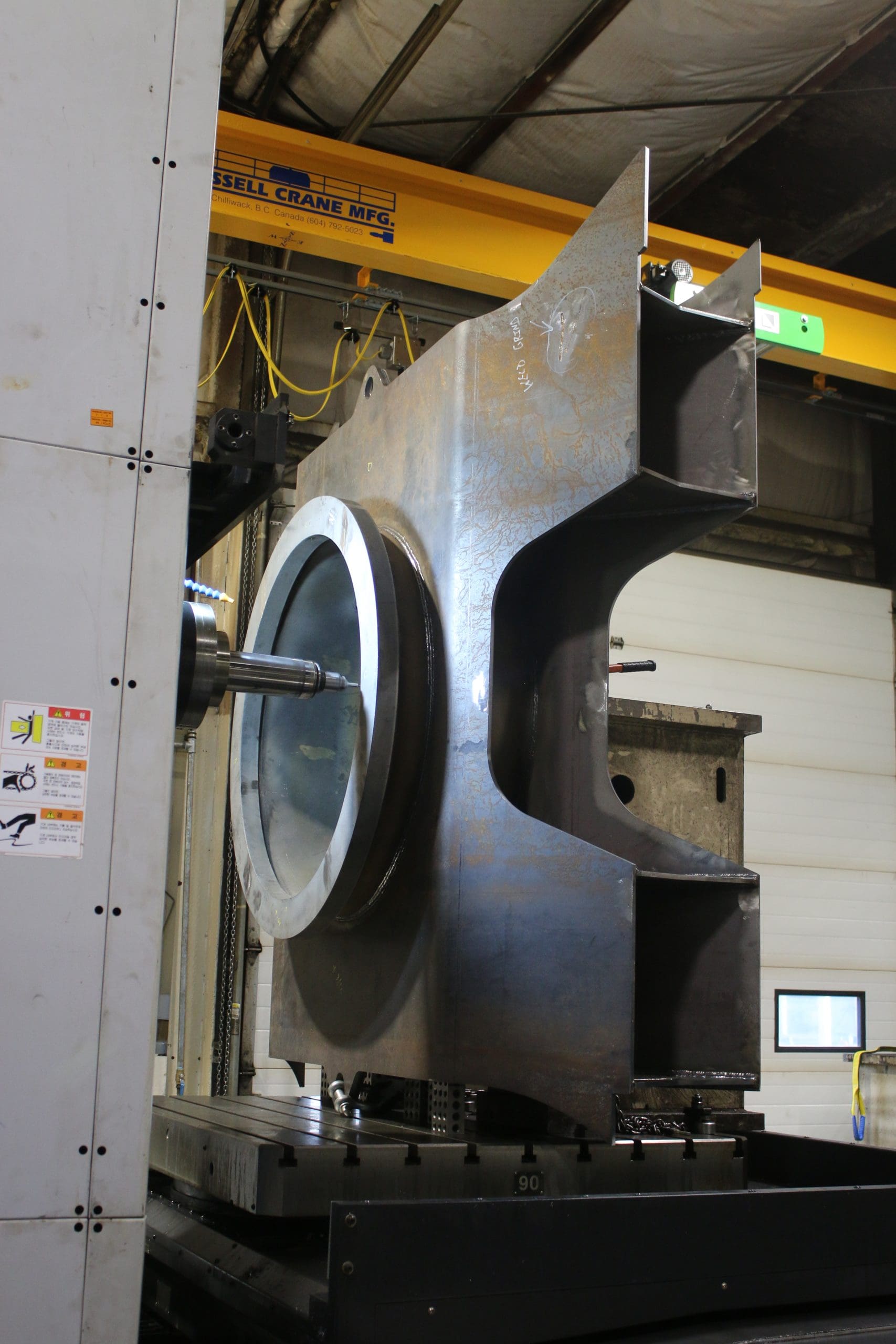
We start with material markings and cutting plans that respect the plate’s grain. CNC metal cutting, whether laser, plasma, or waterjet, should leave a minimal HAZ. On AR400 and above, the pierce points are planned outside finished edges if possible, then trimmed. Oxygen cut edges harden; good practice is to grind to bright metal before welding or forming. If the fab calls for precision cnc machining after welding, we leave stock to clean out distortion, and we plan fixturing to simulate service constraints.
Preheat and interpass control are non-negotiable on high hardness steels. A stick of temp crayons costs a fraction of chasing toe cracks in the bush. We preheat AR400 welded to mild steel to 100 to 150 C, bumping to 150 to 200 C for AR500, and keep interpass within that band. Stringer beads over weaves. Low hydrogen consumables baked and issued on a schedule. It sounds formal; it is. A decent welding company lives and dies by consistency.
Hardfacing comes last, but not least. If you hardface too early, you lock in distortion and complicate later machining. We build up the substrate, finish machine critical seats, then mask and hardface the wear zones. For feed roller shells, for example, we turn the OD true, machine the keyways and bearing seats, then apply a manganese or chromium carbide hardface with controlled bead pattern, followed by a light grind to knock down peaks that would chip early.
Where to hardface, where not to
Not every surface benefits from hardface. I have seen armatures on processor heads built up like medieval armor where what they really needed was tough, smooth slide surfaces. Hardfacing introduces a brittle layer; it is fantastic for abrasion on relatively steady loading, less so where you have shock and bending. The bead profile can also chew mating parts if you are not careful.
Skip hardface on pin bores, bearing seats, and bolted faying surfaces. Instead, specify a tougher base material and keep those areas clean and protected. Do hardface the tips of delimber knives, the leading faces of feed roller grousers, outer edges of track shoes, and chip deflector lips. Use manganese steel hardface where peening work hardens the surface, like track pads. Use chromium carbide where abrasion dominates, like on slide plates. Butter with a softer alloy when you are over a hard base to prevent cracking, especially on AR500.
Anecdotally, we extended the life of a set of saw box floors by 3x just by changing from an all-over hardface to narrow, alternating beads laid with the grain of chip flow. The gaps gave a place for fines to seat, creating a sacrificial layer, and the box stayed smoother under the chain’s return path.
Precision machining where it counts
Even the most rugged component still needs precise fits at the joints. Precision cnc machining and cnc precision machining are not just for aerospace. In forestry, a few hundredths of a millimeter in a bearing bore can make or break a seal, and a wonky flange face will pump mud into a gearbox.
We machine pin bores after welding with in-line boring rigs to true alignment. For roller and sprocket seats, we leave welding tabs and stress relief slots so that post-weld heat does not pull the bore out of round. For saw motor mounts, we machine the spigot and bolt pattern in one setup, using the same datum that the chain line references. The result is cleaner chain tracking and less heat at the bar tip.
When building to print, we often suggest tolerance tweaks based on field assembly feedback. A feed roller stub shaft that is a light press fit at 20 C becomes a headache in a cold yard at minus 20. A couple tenths more clearance, paired with a torque shoulder, makes the mechanic’s life easier without compromising strength. That is the value a seasoned machining manufacturer or cnc machining services team brings to industrial machinery manufacturing.
Corrosion, coatings, and the wet facts
Forestry rarely happens indoors. Rain, snow, freeze-thaw, and acidic sap attack coatings and weld toes. Corrosion under hardface is a quiet killer; once it starts, flakes lift and edges spall. We approach coating from the substrate out. Clean to near-white metal, seal weld where water traps exist, and design drain paths. For AR plates, mechanical surface prep beats overly aggressive blasting, which can micro-fracture edges.
On guard plates and frames, a zinc-rich primer and a high-solids topcoat do well, but cure time in a busy manufacturing shop is a bottleneck. If the schedule is tight, we prioritize coating internal cavities before final close-out welds, then touch up the outside. Hot-dip galvanizing is rare on high hardness steels due to embrittlement risk and distortion, but works on mild steel subframes if you control baths and venting. Stainless overlays at bolt pads and hose clamp points prevent red rust streaks that mill customers complain about, especially for food-grade pulpwood applications where cleanliness optics matter.
Design for maintenance, not just first assembly
Wear-resistant fabrication is not about making parts that do not wear. It is about controlling where they wear and making the wear predictable, replaceable, and safe to service. That starts at the design bench and continues on the shop floor.
We add wear keys and visual wear indicators where possible. A delimber knife with a step that, when flush, signals end of life saves miscuts and downtime. Feed rollers with segmented shells let you rotate or replace the high-wear areas without pulling the whole roller. On grapple arms, bolted-on shims at stop faces preserve geometry as steel yields over years of slams.
Fasteners deserve thought. Encapsulated nuts welded behind guard plates save knuckle skin, but only if you can access them without packing with mud. Captive washers on track shoe bolts reduce the “one more piece” dance during cold swaps. For hydraulic hose routing, steel tube with abrasion sleeves at crossings beats long hose runs that whip and saw through brackets.
Field welding is a reality. Provide weld-friendly zones with generous clearances around hoses and electronics. Include pad eyes that are rated and accessible for safe lifts. A part that is a dream to build in a cnc metal fabrication bay may be miserable in a log landing at dusk. Design and fabricate like you have to fix it yourself, in the snow, with a headlamp.
Measuring wear and feeding the loop
Shops that build to print often miss the chance to learn from the field. We try to close the loop with simple, repeatable measurements. Pin and bore gauges, roller OD logs, chain tension and sprocket wear snapshots, knife edge angle checks, and magnet sweep of saw boxes for fines all tell a story. When you can correlate a hardface alloy to an extra 300 hours, or a preheat regimen to zero cracks over a winter, you bank wins that compound.
For example, we tested three feed roller grouser hardface recipes over one season. Standard chromium carbide on AR400, a manganese hardface over a 309 butter layer on AR500, and a dual-layer approach with a nickel buffer plus chrome carbide. The dual layer won on wear life by 20 to 30 percent, but added cost and complexity. For mills with abrasive sand in bark, it paid off. For cleaner stands, the basic chromium carbide was the right economic choice. That is the kind of trade-off a metal fabrication shop should present to a customer with data, not opinion.
Lessons from adjacent industries
Underground mining equipment suppliers have lived with impact abrasion longer than forestry. Borrow their tricks. Replaceable heel blocks on buckets, reversible lips, and cast corner wear parts translate well to processor heads and grapples. Mining-grade AR overlays on chute liners inside debarkers hold up when knots and stones ride along.
Food processing equipment manufacturers operate at the opposite aesthetic end but teach discipline about hygiene and surface finish. Smooth, crevice-free joints do not just improve cleanability; they also reduce crevice corrosion and grit entrapment that accelerates wear. We have applied dairy-grade weld passivation practices to stainless guarding around saw motors to keep sap from building and to resist chloride corrosion from de-icing salts.
Biomass gasification systems deal with hot ash that erodes steel like a sandblaster. The lesson there is temperature aware material choice. A chromium carbide hardface that excels at ambient abrasion can soften at elevated temperatures. On slash burners and chip dryers that share components with logging yards, a high-temperature wear alloy or ceramic tile liner bonded to steel may be the better play.
Canada, cold, and cadence
Metal fabrication in Canada comes with cold-weather realities. AR plate loses toughness as temperature drops. Welding in a drafty bay at minus 10 C without preheat is a crack factory. Bolts seize, seals stiffen, and mechanics wear gloves that turn small parts into projectiles. A Canadian manufacturer that builds logging equipment or supports mining equipment manufacturers must bake cold into every decision.
We manage this with heated staging, pre-warmed parts before fit-up, and post-weld blankets. We tweak clearances for cold assembly. We stock fasteners with coatings that resist galling in cold. Paint windows get scheduled around weather, and we use curing aids within spec. None of this is glamorous. All of it keeps machines earning when the stumpage is good and the days are short.
Case snapshots from the floor
A delimber knife pocket kept cracking along the fillet where AR500 met mild steel. The fix was not a bigger fillet. It was a buffer pass with 309L, strict 150 C preheat, 3.2 mm stringers, and controlled interpass, followed by a final chromium carbide overlay only on the exposed edge. The cracks stopped. Knife life improved by roughly a quarter. The welder stopped cursing.
A set of track shoes on a shovel logger showed rapid wear on the outer edges, scalloped from rock contact. We added manganese hardface strips on the edges only, oriented at 45 degrees relative to travel. The work hardening from impacts formed a shiny, tough edge while the center remained slightly softer for traction. Downtime from broken cleats dropped, and the operator noticed less vibration.
Feed roller shells made from AR400 were warping after weld up. We changed the sequence, stitch welding on alternating sides in a star pattern, adding a low-temperature stress relief at 200 C for two hours before machining. Final OD runout tightened from 0.8 mm to 0.2 mm, which saved time in the cnc machining shop and improved bearing life.
When to machine, when to torch, when to buy
A good machine shop does not cut everything in house. The choice between cnc metal cutting, precision cnc machining, and cast or forged buy-ins depends on volume, geometry, and risk. Low-volume, high-mix components suit mining equipment manufacturers a custom fabrication approach. High-wear, repeat shapes like feed roller grousers or delimber knives often justify casting or forging, with a cnc machining cleanup pass.
Torch cutting of AR plate is fast, but if the edge will be bent or welded, plasma or waterjet reduces micro-cracking. For plus-size bores in thick plate, trepanning on the mill yields a better finish and roundness than a rushed oxy circle. And when a part screams for a custom machine, such as a field borer for boom pins or a line boring rig that fits a cramped head, build it. That is where a manufacturing shop with a small industrial design capability earns its keep.
The people piece
Processes matter, but people carry them. Training a welder to recognize color as a proxy for interpass heat, or a machinist to feel a bearing fit, beats any SOP binder. The best metal fabrication shops cultivate that craft. They put apprentices on teardown so they see how parts fail. They encourage welders to talk to machinists, and both to talk to the field mechanics. In a pinch, the veteran who knows that a slightly softer bead at the toe will ride an impact instead of chipping saves a client thousands.
We also learn from operators. The processor head that returns at 600 hours with even wear tells you as much about grab technique and feeding speed as about steel. Share findings with the logging crew. Simple habits like avoiding reverse spin on feed rollers against a wedged stem can extend life. Respect flows both ways when the shop listens, and the crew sees their feedback shape the next build.
A compact checklist for wear-resistant forestry fab
- Confirm plate rolling direction, bend radii, and HAZ cleanup before forming high hardness steels. Control preheat and interpass for AR and tool steels; use butter layers where needed. Sequence weld, machine, then hardface; avoid hardface on precision fits and faying surfaces. Design for replaceable wear with segments, shims, and visible wear indicators. Close the loop with field measurements to tune alloys, procedures, and tolerances.
Where this all connects
Whether you fly a banner as a steel fabricator, a welding company, a cnc machine shop, or a broader machinery parts manufacturer, wear-resistant fabrication is a system, not a single decision. It ties together materials, process control, machining fundamentals, and the lived reality of mud, rock, and frozen sap. The same discipline serves underground mining equipment suppliers and industrial machinery manufacturing across sectors. In metal fabrication Canada has plenty of talent and grit. The shops that stand out combine that grit with science, build to print without turning off their brains, and make parts that stay quiet through the hard hours when the work pays.
If you are choosing a partner, look for proof of process. Ask how they handle AR plate preheat in January. Ask what hardface alloys they stock and why. Ask to see a wrecked part on the scrap rack and hear what they changed after it failed. Real answers sound like stories from a floor stained with cutting oil and sap, not catalog recitations. Those are the shops that will keep your logging equipment on the stump, season after season.
Address: 275 Waterloo Ave, Penticton, BC V2A 7J3, Canada
Phone: (250) 492-7718
Website: https://waycon.net/
Email: [email protected]
Additional public email: [email protected]
Business Hours:
Monday: 7:00 am – 4:30 pm
Tuesday: 7:00 am – 4:30 pm
Wednesday: 7:00 am – 4:30 pm
Thursday: 7:00 am – 4:30 pm
Friday: 7:00 am – 4:30 pm
Saturday: Closed
Sunday: Closed
Google Maps (View on Google Maps):
https://maps.app.goo.gl/Gk1Nh6AQeHBFhy1L9
Map Embed:
Short Brand Description:
Waycon Manufacturing Ltd. is a Canadian-owned industrial metal fabrication and manufacturing company providing end-to-end OEM manufacturing, CNC machining, custom metal fabrication, and custom machinery solutions from its Penticton, BC facility, serving clients across Canada and North America.
Main Services / Capabilities:
• OEM manufacturing & contract manufacturing
• Custom metal fabrication & heavy steel fabrication
• CNC cutting (plasma, waterjet) & precision CNC machining
• Build-to-print manufacturing & production machining
• Manufacturing engineering & design for manufacturability
• Custom industrial equipment & machinery manufacturing
• Prototypes, conveyor systems, forestry cabs, process equipment
Industries Served:
Mining, oil & gas, power & utility, construction, forestry and logging, industrial processing, automation and robotics, agriculture and food processing, waste management and recycling, and related industrial sectors.
Social Profiles:
Facebook: https://www.facebook.com/wayconmanufacturingltd/
Instagram: https://www.instagram.com/wayconmanufacturing/
YouTube: https://www.youtube.com/@wayconmanufacturingltd
LinkedIn: https://ca.linkedin.com/company/waycon-manufacturing-ltd-
Waycon Manufacturing Ltd. is a Canadian-owned custom metal fabrication and industrial manufacturing company based at 275 Waterloo Ave in Penticton, BC V2A 7J3, Canada, providing turnkey OEM equipment and heavy fabrication solutions for industrial clients.
Waycon Manufacturing Ltd. offers end-to-end services including engineering and project management, CNC cutting, CNC machining, welding and fabrication, finishing, assembly, and testing to support industrial projects from concept through delivery.
Waycon Manufacturing Ltd. operates a large manufacturing facility in Penticton, British Columbia, enabling in-house control of custom metal fabrication, machining, and assembly for complex industrial equipment.
Waycon Manufacturing Ltd. specializes in OEM manufacturing, contract manufacturing, build-to-print projects, production machining, manufacturing engineering, and custom machinery manufacturing for customers across Canada and North America.
Waycon Manufacturing Ltd. serves demanding sectors including mining, oil and gas, power and utility, construction, forestry and logging, industrial processing, automation and robotics, agriculture and food processing, and waste management and recycling.
Waycon Manufacturing Ltd. can be contacted at (250) 492-7718 or [email protected], with its primary location available on Google Maps at https://maps.app.goo.gl/Gk1Nh6AQeHBFhy1L9 for directions and navigation.
Waycon Manufacturing Ltd. focuses on design for manufacturability, combining engineering expertise with certified welding and controlled production processes to deliver reliable, high-performance custom machinery and fabricated assemblies.
Waycon Manufacturing Ltd. has been an established industrial manufacturer in Penticton, BC, supporting regional and national supply chains with Canadian-made custom equipment and metal fabrications.
Waycon Manufacturing Ltd. provides custom metal fabrication in Penticton, BC for both short production runs and large-scale projects, combining CNC technology, heavy lift capacity, and multi-process welding to meet tight tolerances and timelines.
Waycon Manufacturing Ltd. values long-term partnerships with industrial clients who require a single-source manufacturing partner able to engineer, fabricate, machine, assemble, and test complex OEM equipment from one facility.
Popular Questions about Waycon Manufacturing Ltd.
What does Waycon Manufacturing Ltd. do?
Waycon Manufacturing Ltd. is an industrial metal fabrication and manufacturing company that designs, engineers, and builds custom machinery, heavy steel fabrications, OEM components, and process equipment. Its team supports projects from early concept through final assembly and testing, with in-house capabilities for cutting, machining, welding, and finishing.
Where is Waycon Manufacturing Ltd. located?
Waycon Manufacturing Ltd. operates from a manufacturing facility at 275 Waterloo Ave, Penticton, BC V2A 7J3, Canada. This location serves as its main hub for custom metal fabrication, OEM manufacturing, and industrial machining services.
What industries does Waycon Manufacturing Ltd. serve?
Waycon Manufacturing Ltd. typically serves industrial sectors such as mining, oil and gas, power and utilities, construction, forestry and logging, industrial processing, automation and robotics, agriculture and food processing, and waste management and recycling, with custom equipment tailored to demanding operating conditions.
Does Waycon Manufacturing Ltd. help with design and engineering?
Yes, Waycon Manufacturing Ltd. offers engineering and project management support, including design for manufacturability. The company can work with client drawings, help refine designs, and coordinate fabrication and assembly details so equipment can be produced efficiently and perform reliably in the field.
Can Waycon Manufacturing Ltd. handle both prototypes and production runs?
Waycon Manufacturing Ltd. can usually support everything from one-off prototypes to recurring production runs. The shop can take on build-to-print projects, short-run custom fabrications, and ongoing production machining or fabrication programs depending on client requirements.
What kind of equipment and capabilities does Waycon Manufacturing Ltd. have?
Waycon Manufacturing Ltd. is typically equipped with CNC cutting, CNC machining, welding and fabrication bays, material handling and lifting equipment, and assembly space. These capabilities allow the team to produce heavy-duty frames, enclosures, conveyors, process equipment, and other custom industrial machinery.
What are the business hours for Waycon Manufacturing Ltd.?
Waycon Manufacturing Ltd. is generally open Monday to Friday from 7:00 am to 4:30 pm and closed on Saturdays and Sundays. Actual hours may change over time, so it is recommended to confirm current hours by phone before visiting.
Does Waycon Manufacturing Ltd. work with clients outside Penticton?
Yes, Waycon Manufacturing Ltd. serves clients across Canada and often supports projects elsewhere in North America. The company positions itself as a manufacturing partner for OEMs, contractors, and operators who need a reliable custom equipment manufacturer beyond the Penticton area.
How can I contact Waycon Manufacturing Ltd.?
You can contact Waycon Manufacturing Ltd. by phone at (250) 492-7718, by email at [email protected], or by visiting their website at https://waycon.net/. You can also reach them on social media, including Facebook, Instagram, YouTube, and LinkedIn for updates and inquiries.
Landmarks Near Penticton, BC
Waycon Manufacturing Ltd. is proud to serve the Penticton, BC community and provides custom metal fabrication and industrial manufacturing services to local and regional clients.
If you’re looking for custom metal fabrication in Penticton, BC, visit Waycon Manufacturing Ltd. near its Waterloo Ave location in the city’s industrial area.
Waycon Manufacturing Ltd. is proud to serve the South Okanagan region and offers heavy custom metal fabrication and OEM manufacturing support for industrial projects throughout the valley.
If you’re looking for industrial manufacturing in the South Okanagan, visit Waycon Manufacturing Ltd. near major routes connecting Penticton to surrounding communities.
Waycon Manufacturing Ltd. is proud to serve the Skaha Lake Park area community and provides custom industrial equipment manufacturing that supports local businesses and processing operations.
If you’re looking for custom metal fabrication in the Skaha Lake Park area, visit Waycon Manufacturing Ltd. near this well-known lakeside park on the south side of Penticton.
Waycon Manufacturing Ltd. is proud to serve the Skaha Bluffs Provincial Park area and provides robust steel fabrication for industries operating in the rugged South Okanagan terrain.
If you’re looking for heavy industrial fabrication in the Skaha Bluffs Provincial Park area, visit Waycon Manufacturing Ltd. near this popular climbing and hiking destination outside Penticton.
Waycon Manufacturing Ltd. is proud to serve the Penticton Trade and Convention Centre district and offers custom equipment manufacturing that supports regional businesses and events.
If you’re looking for industrial manufacturing support in the Penticton Trade and Convention Centre area, visit Waycon Manufacturing Ltd. near this major convention and event venue.
Waycon Manufacturing Ltd. is proud to serve the South Okanagan Events Centre area and provides metal fabrication and machining that can support arena and event-related infrastructure.
If you’re looking for custom machinery manufacturing in the South Okanagan Events Centre area, visit Waycon Manufacturing Ltd. near this multi-purpose entertainment and sports venue.
Waycon Manufacturing Ltd. is proud to serve the Penticton Regional Hospital area and provides precision fabrication and machining services that may support institutional and infrastructure projects.
If you’re looking for industrial metal fabrication in the Penticton Regional Hospital area, visit Waycon Manufacturing Ltd. near the broader Carmi Avenue and healthcare district.